
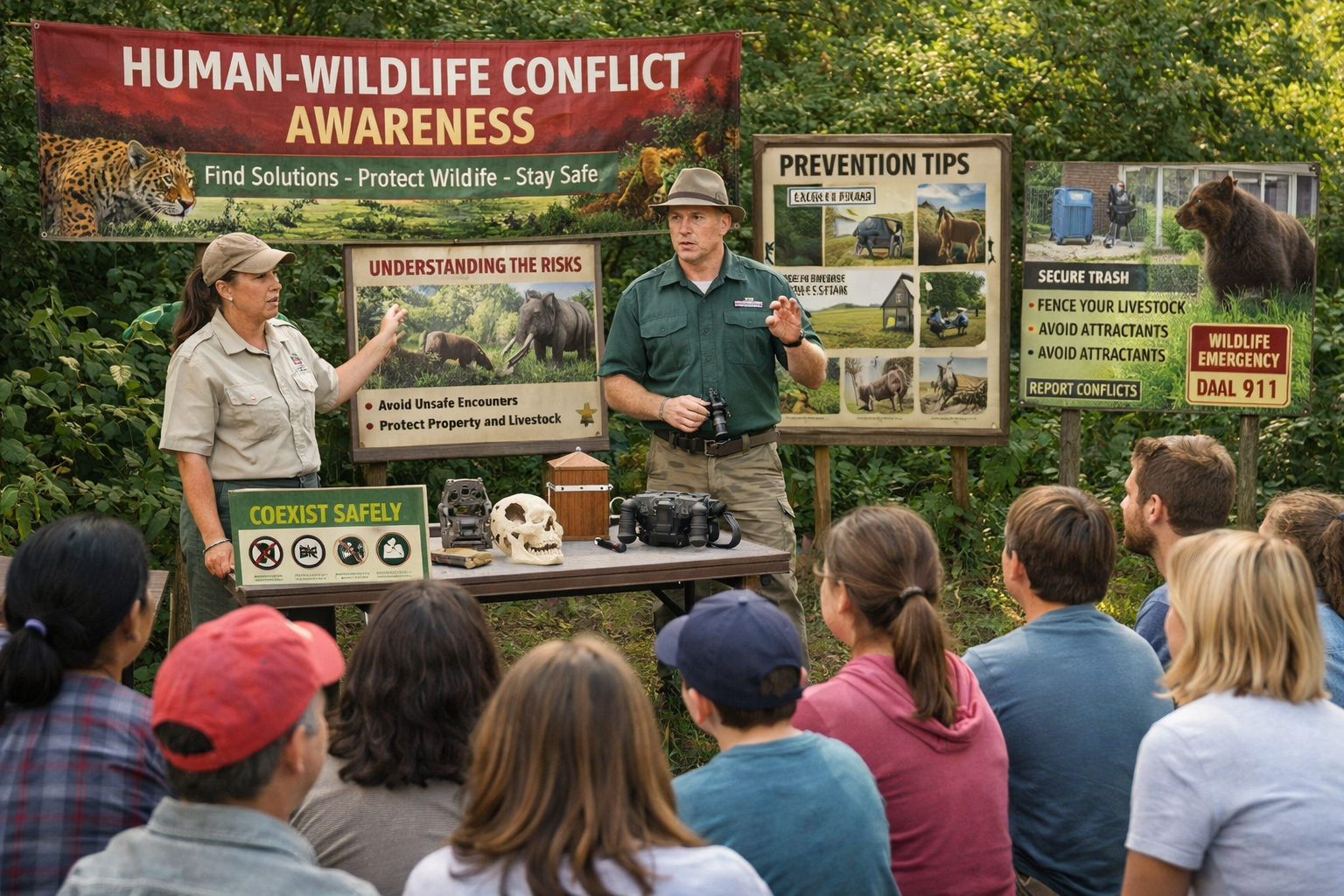
Human–Wildlife Conflict Awareness
Human–Wildlife Conflict (HWC) awareness involves understanding the negative interactions between humans and wild animals, such as habitat loss, crop raiding, and livestock attacks, which threaten both human safety and species survival. It highlights the need to transition from conflict to coexistence through community-based solutions, policy management, and land-use planning.
Key Aspects of HWC Awareness:
- Core Cause: Increasing human population and expansion into natural habitats, which cuts off migration routes and destroys ecosystems.
- Impact on Humans: Economic losses (damaged crops, killed livestock), destruction of property, and physical injury or fatalities.
- Impact on Wildlife: Retaliatory killings, habitat degradation, and population decline.
- Need for Coexistence: Moving toward sustainable solutions like better fencing, community engagement, and supporting local livelihoods to reduce conflict.
Conflict:
- Infrastructure Issues: Animal deaths due to collisions with vehicles or trains, particularly in forested regions.
- Resource Competition: Wildlife breaking into water storage systems during shortages.
- Predation: Predators attacking livestock, causing significant economic damage to farmers.