
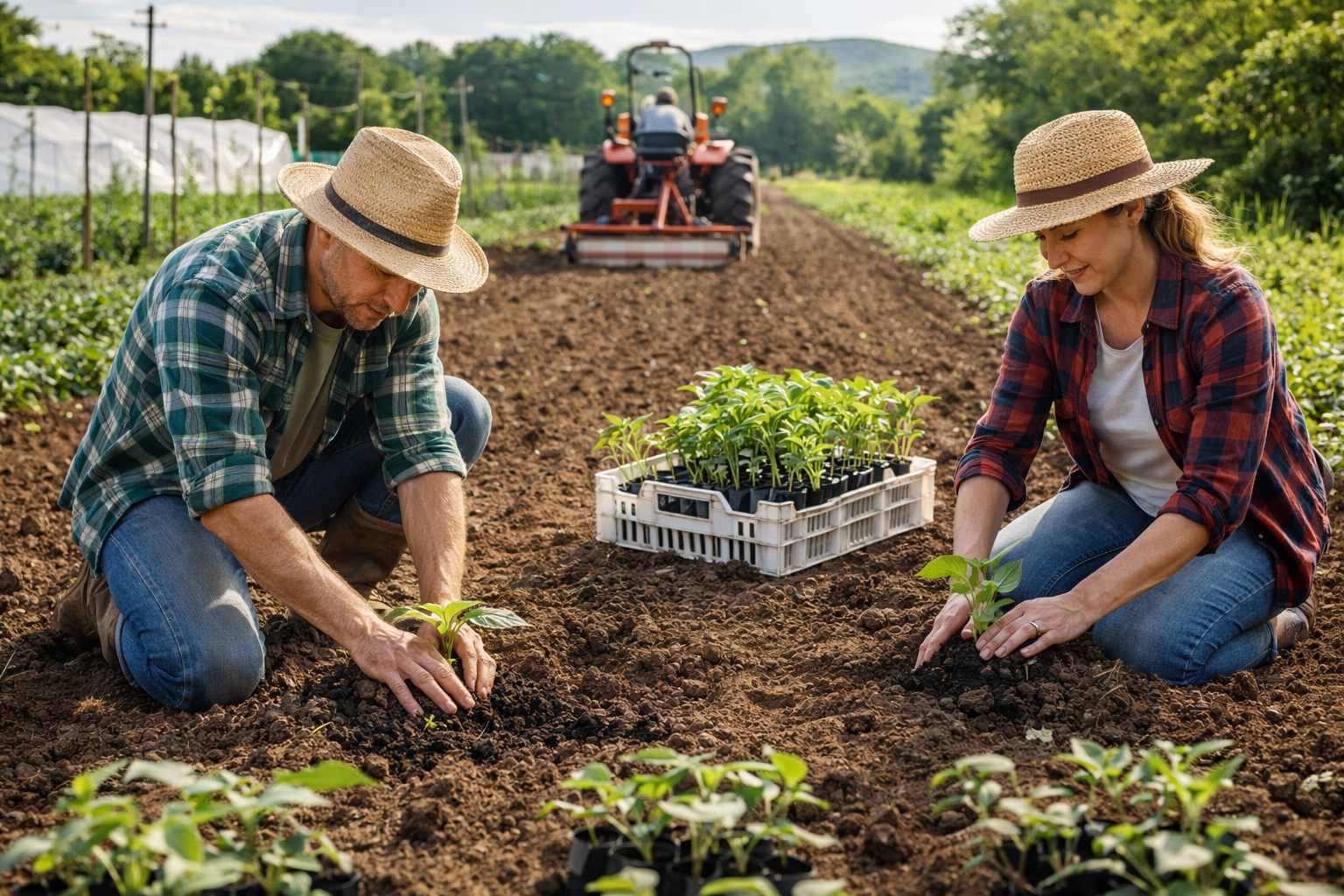
Plantation and Farming
Plantation and farming are both methods of cultivation, but they differ primarily in scale and purpose. Plantation agriculture is a large-scale, capital-intensive commercial system focused on producing a single cash crop (like tea, coffee, rubber, or palm oil) for export, usually found in tropical regions. Farming is a broader term encompassing various practices, ranging from small-scale subsistence farming to commercial cultivation
Plantation Agriculture (Specialized Commercial Farming)
-
- Monoculture: Exclusive focus on one crop, such as rubber, tea, coffee, cocoa, or sugarcane.
- Large Scale: Requires vast, cleared land areas, often managed by corporations.
- High Capital & Technology: Involves heavy investment in machinery, fertilizers, and processing factories.
- Labor Intensive: Requires a large, often hired workforce, historically sometimes indentured or enslaved.
- Export-Oriented: The produce is primarily meant for international markets rather than local consumption.
- Location: Primarily located in tropical and subtropical regions.
- Pros: High profitability, consistent product quality, creates employment, and strengthens local infrastructure.
- Cons: High risk due to price fluctuations, environmental degradation (deforestation, biodiversity loss), and susceptibility to pests due to low genetic diversity.
Farming (Broad Agricultural Practices)
-
- The act of growing crops or raising livestock to produce food, fiber, and other materials.
- Types:
- Subsistence Farming: Small-scale farming aimed solely at feeding the farmer’s family.
- Commercial Farming: Farming for profit, which includes plantations but also smaller, diversified farms.
- Mixed Farming: Involves growing crops and raising livestock simultaneously.
- Characteristics: Generally more diversified than plantations, often smaller in scale, and sometimes utilizes family labor rather than a large hired workforce