WHO WE ARE
About
Paryavaran Chetna Evam Gramin Vikas Prashikshan Kendra
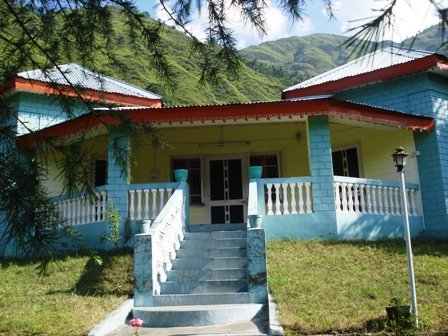
The Paryavaran Chetna Avam Gramin Vikas Kendra, Saho, was inaugurated on the 26th of July, ’05, and is an established and registered body with a duly elected executive to oversee its further activities, maintenance and sustainability. Environmental awareness and conservation are our main objectives.
The Chetna Kendra is the only one of its kind that has been built through complimentary community participation and government facilitation. It is an example of a standing asset having been created through a fixed amount of capital provided from part of a government sponsored scheme and the local community’s initiative. As such, this asset stands as a tribute to PRIs. It has been lauded by the district administration and the State and Central Governments as an example, and indeed a model, for further sustainable environment awareness and rural income generation initiatives.
It is our objective to facilitate the impartation of varied qualitative and practical training related to indigenous and traditionally employed environmental sensitive initiatives for the development of agriculture, animal husbandry, revival of traditional arts and crafts, cottage industries etc in an economically profitable manner, as income generation schemes for stakeholders within the community.
Animal husbandry, horticulture and agriculture related initiatives would include training and imparting a) scientific eco-sensitive water management and harvesting for irrigation use, b) the scientific use of natural manure, pesticide and medicinal know-how, coupled with an awareness campaign describing their long term negative effects upon the environment and their subsequent economic viability options, c) advanced and more profitable producer friendly marketing for horticultural related produce, d) enhanced production of qualitative grass/fodder (in collaboration with the forest and animal husbandry departments if required to be harvested from common rakbas), e) niche based initiatives in poultry farming, fisheries, bee-keeping and cottage industries. The importance of eco-tourism as an income generating micro-level village initiative needs to be addressed, as tourism and its accompanying baggage need to be environmentally sensitized. PRIs and self-governance are legal and mandatory institutions at the village level. They are equally responsible for developmental works in rural areas, as also for participation and awareness advocacy of the same. It will only be possible for the community and its elected representatives to impact upon developmental policy if empowered with an awareness of the same, as also for PRIs and government depts. to work in a mutually complimentary and sustainable fashion. Health and Family Planning, gender empowerment and primary education are also areas of prioritized intervention.
The Chetna Kendra facilitates any awareness related programs related to the above, and highlights their scientific dissemination through practical training workshops and courses. This is imperative for integrated rural development along eco-sensitive, income-generating sustainable lines.
We aim at holistic, environment sensitive and village d
evelopment, through the platform of environmental awareness. We are committed to environmental conservation going hand in hand with rural development. In doing so, we invite likeminded organizations and individuals to share in our initiative.
In the one year since its inception the Chetna Kendra has played host to several environment workshops, facilitating field level studies for students, researchers and community representatives. It hosted the State Level Parvatiya Vikas Ke Liye Himalaya Niti Conference in February 2006, attended by delegates from all over the country. The highlight for the Kendra this year, however, was the visit of renowned environmentalist Sh. Sundar Lal Bahuguna ji in April 2006. While participating in a day long interactive session with members of the community, he described his visit to the Kendra as a ‘tirth’ or pilgrimage, appreciating the multi-dimensional and holistic initiatives that are under way. These include a library whose membership is ever on the increase, a positive pointer to the fact that a ‘culture of reading’ is gradually pervading the community. Recent initiatives include an activity center for children, and the launch of a multi-media center. On the Rural Development front, the Chetna Kendra is successfully running a nursery to propagate indigenous species, as well as a dairy. The Kendra is accessing the correct technical expertise for certain specific rural development projects, especially in the field of agro and horticultural based home industries, like the manufacture of rose water and wild apricot oil, collection and regeneration of extinct medicinal species, as well as dairy related industries. In July 2006, the Chetna Kendra invited like-minded environmentalist organizations to a one-day participatory meeting in Chamba, in order to address common concerns from a common platform. It was a well attended and representative, as also much appreciated as an initiative from which environmentalists could address growing environmental concerns through a common ecological dialogue.
- - To promote eco-tourism activities such as nature trails, trekking, bird watching, and butterfly watching in a responsible and sustainable manner. - To provide a peaceful and healthy environment for nature lovers, students, and researchers through eco-friendly facilities. - To ensure community participation in all conservation and sustainability initiatives. - To expand conservation efforts from local valleys to the entire Chamba district and beyond. - To promote sustainability over profit, ensuring that environmental protection remains the core purpose of the organization
- To promote afforestation and ecological restoration by planting native tree species and protecting natural forests.
- To implement soil and water conservation measures under watershed programs to prevent erosion and reduce flood risks.
- To conserve and protect nature and wildlife through scientific, community-based, and sustainable approaches.
- To work towards a Polythene-Free Chamba by conducting plastic removal drives and spreading awareness about waste management.
- To mitigate Human–Wildlife Conflict through education, awareness campaigns, and practical mitigation strategies that promote coexistence.
- To prevent illegal hunting and wildlife crimes by creating awareness and encouraging community vigilance.
- To organize environmental awareness programs, including World Environment Day, Wildlife Week, quizzes, declamation contests, and poster-making competitions.
- To encourage research and environmental education by collaborating with schools, colleges, and researchers.
- To publish environmental literature and research, including the release of Paryavaran Chetna Magazine to promote scientific knowledge and conservation awareness.
Experienced Team
Excellent Services
CertifiedSoil & Water Conservation
OUR HISTORY
How We Started
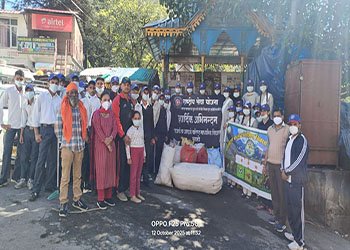 26 July 2005,
Started Our Dream
Paryavaran Chetna Kendra has been continuously working for environmental protection, ecological restoration, and wildlife conservation in Chamba district of Himachal Pradesh.
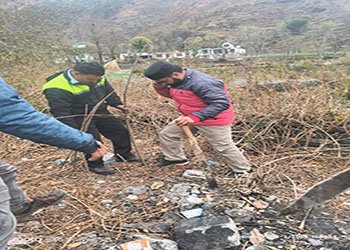 50,000
Planted Approximately
We have successfully planted approximately 50,000 broad-leaved and native tree species, including Ban (Oak), Deodar, Dhaman, Darek, and Reetha, contributing significantly to biodiversity conservation and ecological balance in the region.
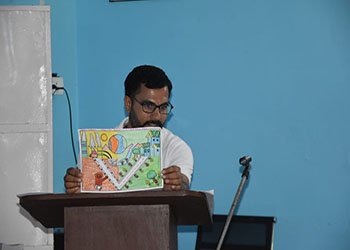 500+
500+
Training with Students or Volunteer
Participation from 21 schools, where wildlife quizzes, declamation, and poster-making competitions were conducted, and winners were awarded cash prizes.