
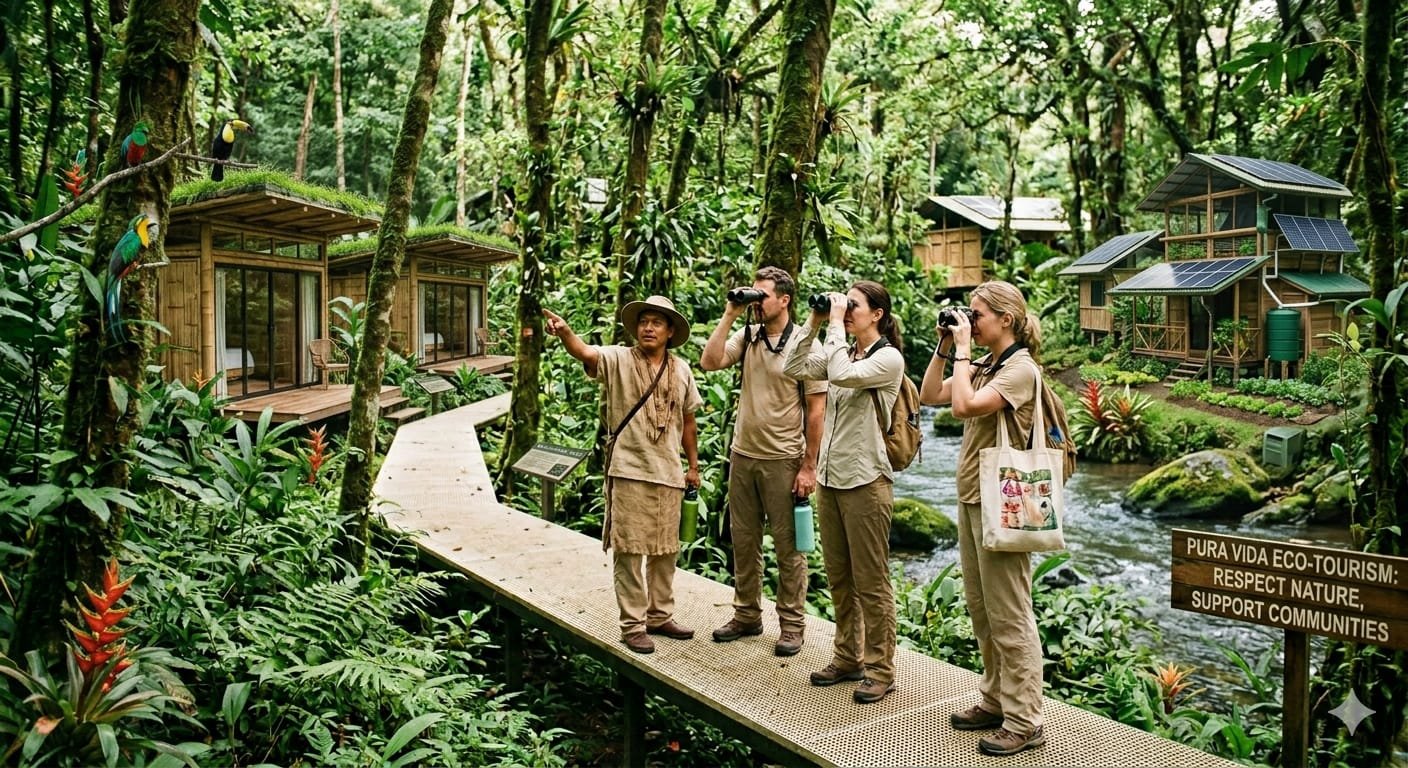
Eco Friendly Tourism: A New Era of Conscious Travel
Eco-friendly tourism (also called sustainable tourism) means traveling in a way that protects the environment, respects local cultures, and benefits local communities—while still allowing people to enjoy and explore new places.
Go Green Eco Tourism
Eco-friendly tourism, or ecotourism, involves responsible travel to natural areas that conserves the environment, sustains local community well-being, and educates travelers.
- Environmental Conservation: Protecting biodiversity, reducing carbon footprints, and minimizing waste (e.g., avoiding single-use plastics).
- Community Benefit: Supporting local economies by hiring local guides, staying in eco-lodges, and purchasing local goods.
- Cultural Respect: Respecting and learning about local traditions and cultures.
- Education: Increasing awareness of environmental and cultural issues for both tourists and residents
- Transportation: Choosing trains, bicycles, or walking over flights and car rentals.
- Accommodation: Staying at eco-certified hotels or sustainable, locally owned lodges.
- Activities: Engaging in low-impact activities like hiking, bird watching, or visiting community-managed nature sites.
- Mindset: Following “Leave No Trace” principles—not taking, leaving, or disturbing anything in natural habitats
- A solar-powered resort in Fiji running on 100% renewable energy and rainwater harvesting.
- Community-run tourism in Kerala, India, involving forest-dependent communities in managing treks and wildlife habitats.
- Eco-friendly tourism initiatives in protected areas.