Soil & Water Conservation
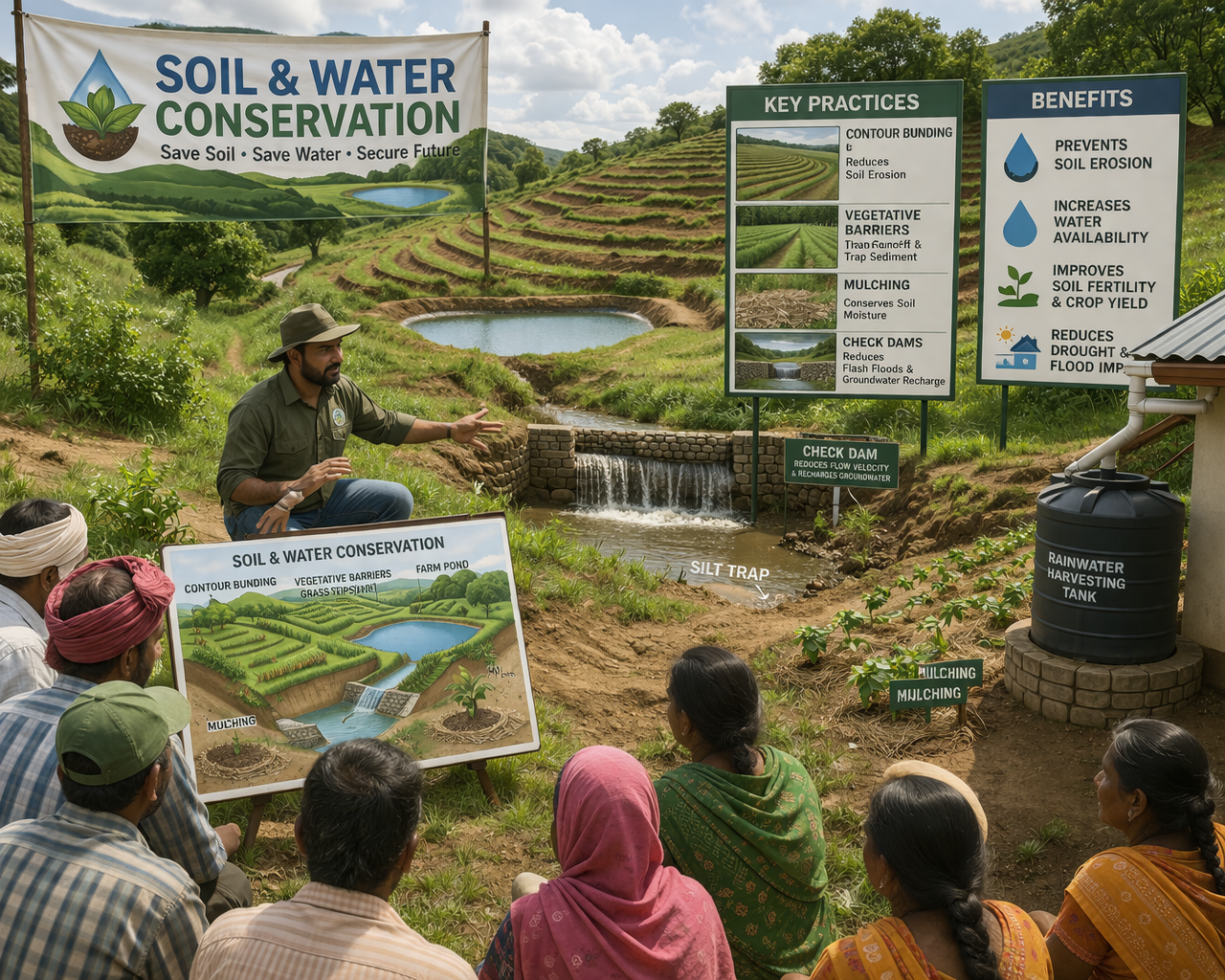
Soil and water conservation involves techniques to prevent soil degradation, erosion, and water wastage, ensuring sustainable land use and ecological balance. Key methods include contour farming, terracing, cover cropping, and reducing tillage to protect soil structure, improve water infiltration, and manage surface runoff.
Core Components of Soil and Water Conservation:
- Soil Conservation: Protects fertile topsoil from erosion (wind/water) and maintains soil health for agriculture. Methods include reducing disturbance, maintaining soil cover, and increasing organic matter.
- Water Conservation: Improves the efficient use of water, promoting infiltration and groundwater recharge rather than rapid surface runoff
Key Techniques & Methods:
- Terracing & Bunds: Creating steps on hilly terrain to reduce water speed and prevent soil erosion.
- Contour Cultivation: Farming across a slope rather than up/down, which holds water and reduces soil runoff.
- Cover Crops & Mulching: Planting crops (e.g., legumes) to cover the soil, protecting it from erosion and improving fertility.
- Conservation Tillage (Zero/Reduced Tillage): Minimizing soil disturbance to maintain soil structure and reduce erosion.
- Water Harvesting: Constructing structures to collect rainwater for agricultural and household use.
Objectives & Benefits:
-
- Preventing Erosion: Reducing the loss of fertile topsoil.
- Improving Productivity: Enhancing soil fertility and enhancing water retention for better crop yields.
- Water Management: Controlling runoff and increasing groundwater recharge.
- Sustainability: Ensuring agricultural productivity in the long term, reducing dependency on synthetic fertilizers.
- Climate Change Mitigation: Sequestering carbon in the soil.